

Job searching often feels like a second job. You spend hours practicing algorithms and refining your resume until every pixel is perfect. Then you reach the application page and see a field marked optional. It asks for a cover letter. It is tempting to skip it. You might think your code speaks for itself, but many people share this misconception.
Your code shows what you can build. A software engineer cover letter explains how you think. It links your technical skills to business value. It can move your application from the rejection pile to the interview queue. It also gives you a chance to show personality. You can address employment gaps and highlight specific passions for the company’s mission.
This guide explains how to write a software engineer cover letter that gets results. It covers formatting, content, and common mistakes.
Also read:
- How to Write an Efficient Software Engineer Resume
- How Remote Software Engineers Can Build a Strong Online Presence
- What Software Engineer Recruiters Look For in a Candidate
Example software engineer cover letter
Here is an example of a cover letter for a software engineer with 5 years of experience. This example assumes the candidate is applying for a generic “Senior Backend Engineer” role at a company scaling its operations. View more cover letter examples by industry.
Download this template (.docx)

Software engineer cover letter example
Subject: Application for Senior Software Engineer – Your Name
Links: github.com/url | yourportfolio.com
Dear (hiring manager’s name),
I have been a user of StreamFlow’s project management tools for three years. I specifically admire how your team handled the recent migration to a microservices architecture without disrupting the user experience. As a developer who thrives on solving scalability challenges, I see the Senior Software Engineer role at StreamFlow as the perfect place to apply the optimization strategies I have refined over the last five years.
In my current role at DataPeak Solutions, I was the lead engineer responsible for stabilizing our legacy API, which serves 50,000 daily active users. We faced significant latency issues during peak hours. I diagnosed the bottleneck within our database query structure and led a small squad to implement a caching layer using Redis. This initiative reduced average API response time by 40% and cut server costs by 15% annually. I detail the architectural choices for this project in the “pinned” repository on my GitHub profile.
Beyond writing clean, maintainable code, I believe senior engineers have a responsibility to elevate the team. Over the past two years, I have mentored three junior developers, guiding them from their first commit to owning full feature lifecycles. I implemented a new code review checklist that decreased post-deployment bugs by 20% in Q3 of this year. I am eager to bring this collaborative, mentorship-focused mindset to your engineering team.
I am particularly interested in StreamFlow’s upcoming roadmap regarding real-time collaboration features. I have significant experience with WebSockets and event-driven architecture that I would love to discuss with you.
Thank you for your time and consideration. I look forward to the possibility of discussing how my background in backend scaling can support StreamFlow’s growth.
Best regards,
Your Name
Phone number
Email
Do developers actually need cover letters?
Many applicants view cover letters as outdated, especially in tech. The demand for skilled developers is high, but the competition for top roles is intense and a strong letter often acts as a tie-breaker.
Recruiters can receive hundreds of applications for a single role. A survey by Career Reload on hiring practices found that 89% of recruiters and hiring managers expect a cover letter. They become even more important when a hiring decision is close. If your resume matches another candidate’s resume, the letter often decides who gets the interview.
The value of a cover letter also depends on company size. Large tech companies tend to rely on automated filters. Smaller startups place more weight on culture fit. A startup engineering manager reads letters to understand passion and to see if you will thrive in a small team. A cover letter is the best place to show this.
Even if the field says optional, treat it as required. It shows effort. It shows you researched the company. It proves you can explain complex ideas clearly. Communication is a vital skill for senior engineers.
Debug the job description before writing
Do not start writing right away. You need to analyze the problem first, much like reading requirements before writing code. You must understand what the company actually needs.
Read the job description three times. Look past the list of programming languages. Identify the business problem they want to solve. Are they shifting from a monolith to microservices? Maybe they preparing for a larger user base? Are they focused on improving mobile performance?
Your software engineer cover letter should speak to these challenges and show that you can solve them.
Watch for keywords that reflect the engineering culture. You might notice words like collaborative, mentorship, or autonomy. Use these same words in your letter because they signal that you match their environment.
Try to find the hiring manager’s name. A generic greeting like To Whom It May Concern feels distant. Check LinkedIn and search for Engineering Manager at that company. Addressing a real person creates an immediate connection.
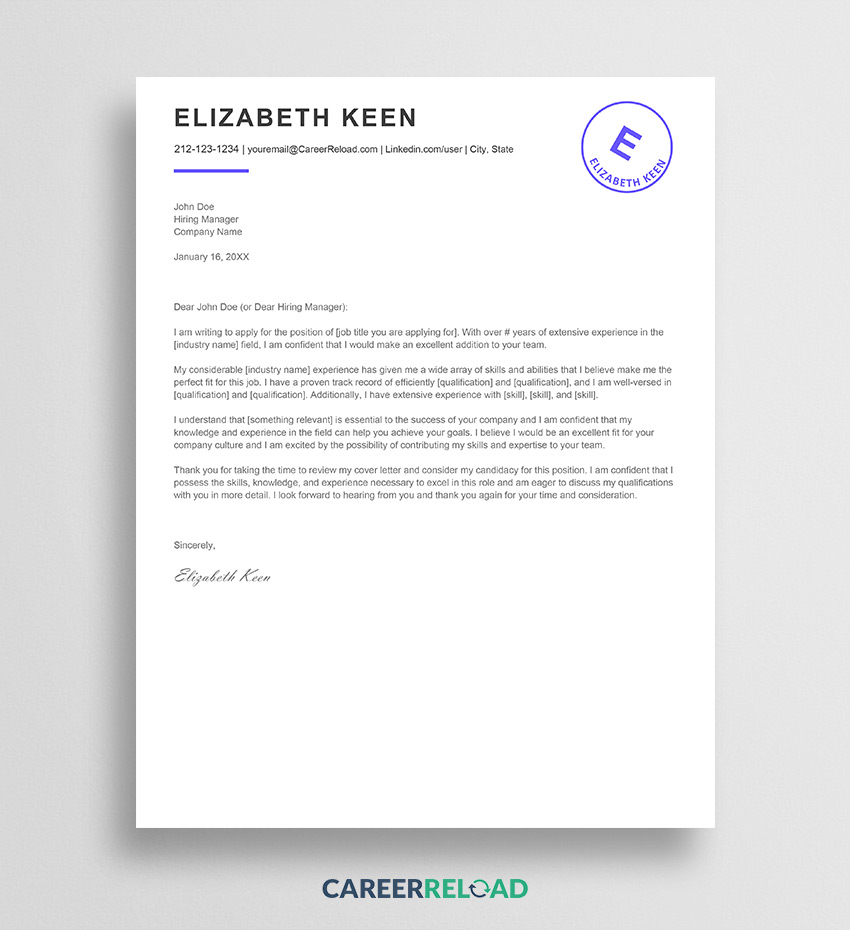
Here are some Word cover letter templates that you can use to get started:


Anatomy of a strong software engineer cover letter
A strong letter follows a clear structure. It leads the reader through your story in an organized way. It does not need many paragraphs but it needs to make every line count.
The header and contact info
Keep this section simple. Include your name, phone number, and email. Add links to your digital presence, such as your GitHub profile and portfolio site. If you have a LinkedIn profile, include it as well. Make sure all links are clickable.
The opening hook
Recruiters scan documents quickly, so you have little time to get their attention. Avoid starting with a line like “I am writing to apply for the Software Engineer role” because they already know this.
Begin with a hook. Reference a recent project the company shipped or explain how their product solves a problem that matters to you. Connect your experience to their mission. For example, mention if you have used their API in a side project.
The body paragraphs
This section shows your value. Do not repeat your resume. Choose two or three key achievements and focus on the ones that relate to the role. If the job centers on backend scaling, describe a time you improved database performance.
The call to action
Close the letter with confidence. Restate your interest and ask for the interview. Note that you look forward to discussing your technical background. End with a professional sign off.
Showcase technical skills effectively
Listing programming languages in a sentence is not effective. The hiring manager can see your skills list on your resume. The cover letter must provide context. You need to explain how you use these tools to solve problems.
Use the STAR method to structure your examples. STAR stands for Situation, Task, Action, and Result.
- Situation: Describe the problem you faced.
- Task: Explain what you needed to achieve.
- Action: Detail the technical steps you took. Mention the specific stack you used.
- Result: Quantify the outcome.
Numbers are powerful. Do not just say you “fixed bugs.” Say you “reduced application crash rates by 15%.” Do not just say you “know Python.” Say you “built a Python script that automated data entry, saving the team 10 hours per week.”
Engineering managers want to see impact. They want proof that you understand business metrics. Showing how your code ties to revenue or efficiency demonstrates senior-level thinking.
Tailoring your approach by experience level
Your strategy should match your career stage. A junior developer brings different strengths than a principal architect.
Junior developers and bootcamp graduates
You may not have much industry experience, and that is expected. Focus on your potential. Highlight your ability to learn. Talk about complex side projects and explain why you chose a specific tech stack for a personal app. This shows that you think about architecture.
Emphasize soft skills like teamwork, communication, and adaptability. These matter for junior roles. Show that you are open to mentorship.
Senior software engineers
Focus on leadership and scale. Describe architectural choices you made and explain how you supported junior team members. Share moments where you communicated technical risks to nontechnical stakeholders.
Your value lies in reliability and experience. Show that you can spot problems early and prevent them. Highlight your system design skills.
Career changers
Use your past background as a strength. If you were a teacher, you bring strong communication skills. If you worked in finance, you understand fintech rules. Explain how your previous career helps you build better software. This perspective adds value.
Managing GitHub and portfolio links
Links matter in a software engineer cover letter, but they need context. A busy manager might not know where to look in your repository.
Guide the reader and tell them exactly what to review. You can say something like, “Check the auth service folder in my GitHub repo to see how I handled token validation.” This saves time and points them to your strongest work.
Make sure your ReadMe files are solid. The ReadMe is the first thing someone sees on GitHub. It should explain what the project does and how to run the code. An empty ReadMe signals weak documentation skills, and documentation is an important part of modern engineering.
Double-check every URL. A broken link creates a poor first impression and suggests that you missed details.
Common mistakes to avoid
Writing a cover letter requires focus. Avoid these common errors to keep your application strong.
- The resume rehash: Do not rewrite your resume in paragraph form. This wastes space. Use the letter to tell stories that do not fit on a resume.
- Typos in tech stacks: Misspelling a language is a red flag. Do not write “Javascript” if the standard is “JavaScript.” Do not write “Github” with a lowercase H. These details matter to engineers.
- Generic templates: Avoid templates that look copied. If you forget to change the company name, you will be rejected. “Dear Hiring Manager at [Company Name]” is an instant failure.
- Excessive length: Keep it under 400 words. Recruiters are busy and appreciate brevity. A long wall of text is intimidating, so get to the point quickly.
- Negative language: Do not apologize for skills you lack. Focus on what you have. Do not say “I don’t have experience with Go.” Say “I am excited to apply my C++ background to learn Go quickly.”
Frequently Asked Questions
How long should a software engineer cover letter be?
A cover letter should be concise. Aim for 250 to 400 words. It should fit on a single page with plenty of white space.
Is a cover letter necessary for developers?
While often optional, a cover letter is highly recommended. It allows you to explain gaps, showcase personality, and detail specific technical achievements that resumes cannot convey.
Can I use a cover letter template?
You can use a structure or outline as a starting point. However, you must customize the content for every job. Generic templates are easily spotted and often ignored by recruiters.
What is the most important part of a technical cover letter?
The most important part is connecting your technical skills to business value. You must explain how your coding abilities solve specific problems for the company you are applying to.
Should I put code snippets in my cover letter?
No, do not include raw code. It messes up formatting and ATS parsing. Instead, describe the logic or outcome of your code and provide a link to your GitHub repository.
Who should I address the letter to?
Try to find the specific hiring manager or engineering lead on LinkedIn. If you cannot find a name, use “Dear Engineering Hiring Team” or “Dear Hiring Manager.”
Conclusion
Writing a software engineer cover letter is an investment. It takes time to research and tailor each one, but the return is high. It sets you apart from the large group of easy apply candidates.
A strong letter adds a human touch to your application. It shows how your skills support the company’s goals. It proves you can communicate, not only write code.
Review your draft carefully. Read it out loud to check how it flows. Verify all links again and then send your application with confidence.

Alex is a career expert who specializes in resume writing and job search strategies. He focuses on sharing real-world tips that make work and job search feel more manageable.
Others also read
How to Create a CAR Method Resume
Resume Now Review: AI Resume Builder
Perfect Resume Example For Teachers
9 DEI Skills for Your Resume
AI Resume Mistakes to Avoid
Pharmacy Technician Resume Examples and Writing Guide
11 Problem-Solving Skills to Put on Your Resume
9 Common Job Interview Questions and How to Answer Them
You Might Also Like These Free Templates
Resume Template in Word Document
Google Docs Resume Format – Debbie
Free Template for Resume
Free Resume Form Template
2 Column ATS Resume Template
ATS Friendly Resume Format for Word – Lindsay
Cover Letter Template with Monogram
Professional Cover Letter Template
Free Modern Resume Template for Word
Free Job Application Tracker for Excel
Free Resume Template Download for Word – Farrah
Free ATS-Friendly Resume Template – Emily