
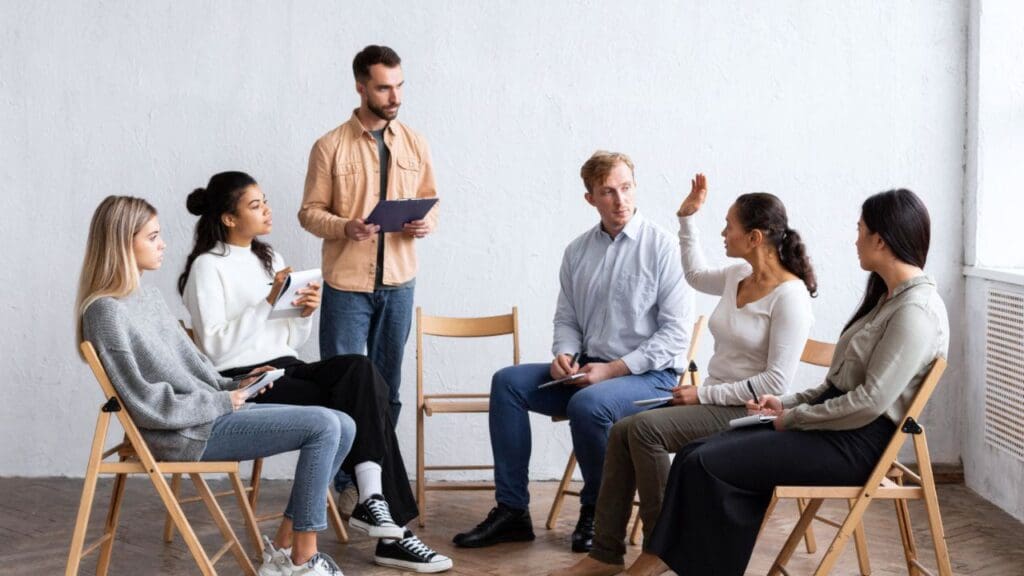
Group interviews are a common hiring method used by companies that want to assess multiple candidates at once. Instead of meeting candidates individually, employers bring several applicants together and evaluate how they interact, communicate, and perform in a shared setting.
This format helps hiring teams see more than just qualifications on paper. They can observe how people think, respond under pressure, and work with others in real time. For candidates, this means success depends not only on what you say, but also on how you engage with the group.
Understanding how group interviews work and preparing for them can improve your chances of standing out for the right reasons.
What are group interviews and how they work
Group interviews can vary in format, but most follow a structured process designed to observe behavior across different situations.
At the start, candidates are usually welcomed and given an overview of the session. This may include introductions, followed by one or more activities. These activities are carefully chosen to test specific skills such as communication, teamwork, and decision-making.
Common formats include:
- Open discussions where candidates share ideas on a topic
- Team-based tasks that require solving a problem together
- Role-playing scenarios based on real job situations
- Short presentations delivered individually or as a group
Some sessions are highly interactive, while others are more structured with turns for each candidate. In either case, interviewers observe how you contribute, not just what you say.
Employers rely on this format because it reveals behaviors that are difficult to measure in traditional interviews. They can see how candidates handle pressure, respond to others, and adapt to changing situations.
What employers look for in group interviews
Understanding what hiring managers look for can help you focus your efforts during group interviews.
Communication is one of the most important factors. Employers want to see that you can express ideas clearly and concisely. At the same time, they assess how well you listen and respond to others.
Teamwork is equally important. Strong candidates do not try to dominate the conversation. Instead, they contribute in a way that supports the group’s progress. This includes encouraging others, building on ideas, and keeping discussions productive.
Leadership is often misunderstood in this setting. It does not mean taking control of every situation. It can be as simple as helping the group stay organized, summarizing key points, or guiding the discussion when it loses focus.
Problem-solving skills are also tested, especially during group tasks. Employers look for logical thinking, structured approaches, and the ability to work toward solutions as part of a team.
Finally, attitude and professionalism matter throughout the process. Respectful behavior, positive body language, and the ability to stay calm under pressure all contribute to a strong overall impression.
How to prepare for a group interview
Preparation for group interviews should focus on both knowledge and behavior. It is not enough to know your resume. You need to be ready to interact in a dynamic environment.
Start by researching the company and the role. Understand what the organization values and what skills are most relevant. This helps you align your contributions with what the employer is looking for.
Next, practice speaking in group settings. Many candidates struggle not because they lack knowledge, but because they are unsure when and how to contribute. Practicing can help you develop a natural rhythm.
Focus on these areas during preparation:
- Explaining ideas clearly and briefly
- Listening without interrupting
- Responding to others in a constructive way
- Staying composed when multiple people are speaking
Preparing a short personal introduction is also important. This is often your first opportunity to make an impression. Keep it clear and relevant, highlighting your background and what you bring to the role.
Plan how you will approach participation. Think about how you will enter discussions, how often you will contribute, and how you will support others. Having a simple strategy can help you stay balanced during the interview.
Dress professionally based on the company’s environment. Bring:
- Copies of your resume
- A notebook and pen
- Any required documents
Being organized shows attention to detail and professionalism.
Strategies to stand out
Standing out in group interviews is not about being the loudest person in the room. It is about being effective, consistent, and aware of the group dynamic.
One of the easiest ways to make an impact is to contribute early. Speaking within the first part of a discussion helps establish your presence. It shows confidence and willingness to engage.
At the same time, avoid over-participating. Dominating the conversation can create a negative impression. Employers often prefer candidates who balance speaking with listening.
Active listening is a key differentiator. When you refer to someone else’s point and build on it, you show that you are engaged and collaborative. This approach also helps create more meaningful contributions.
Another effective strategy is to help structure the discussion. For example, you might suggest breaking a problem into steps or summarizing what the group has agreed on so far. This type of contribution demonstrates leadership without being controlling.
Maintaining strong non-verbal communication also matters. Eye contact, posture, and facial expressions all signal confidence and professionalism. Even when you are not speaking, you are still being evaluated.
Staying calm is essential. Group interviews can feel competitive, especially when others interrupt or speak frequently. Remaining composed shows maturity and emotional control, which are valuable in any role.
Handling different types of activities
Different activities require different approaches. Preparing for each type helps you respond effectively.
Group discussions
In discussion-based formats, your goal is to contribute meaningfully while encouraging others.
Focus on:
- Sharing structured ideas
- Keeping your points concise
- Inviting quieter participants to speak
This shows both communication skills and leadership.
Problem-solving tasks
These tasks often involve analyzing a situation and proposing solutions as a group.
A strong approach includes:
- Breaking the problem into smaller parts
- Suggesting a clear structure
- Helping organize group input
- Keeping the discussion focused on solutions
Employers value logical thinking and teamwork here.
Role-playing exercises
Role-play scenarios test how you respond to real-world situations.
To perform well:
- Stay in character and take the task seriously
- Communicate clearly and professionally
- Adapt to new information as the scenario evolves
This shows flexibility and practical skills.
Presentations
Some group interviews require presenting ideas to the interviewers.
Key tips include:
- Organize your points clearly
- Speak confidently and at a steady pace
- Maintain eye contact with the audience
- Keep your message focused and easy to follow
Even in a group setting, clear delivery can make a strong impression.
Succeeding in a virtual setting
Virtual group interviews introduce additional challenges, but the core principles remain the same.
Start by ensuring your technology is reliable. Test your internet connection, camera, and microphone ahead of time. Technical issues can disrupt your performance and reduce your confidence.
Your on-screen presence is just as important as your in-person behavior. Sit upright, maintain eye contact with the camera, and avoid distractions. A clean and quiet background also helps create a professional impression.
Turn-taking requires more attention in virtual settings. Since it is harder to read cues, wait for clear pauses before speaking. Avoid interrupting, as this can be more noticeable online.
Stay engaged throughout the session. Nodding, maintaining focus, and reacting appropriately to others show that you are actively participating. Even when muted, your behavior is still visible and evaluated.
Following basic digital etiquette, such as muting when not speaking, reflects professionalism and respect for others.
What to do after the interview
Your performance does not end when the session is over. Taking the right steps afterward can strengthen your overall impression.
Begin by reflecting on your performance. Identify what worked well and where you can improve. This helps you prepare for future group interviews and build confidence over time.
Sending a follow-up message is a simple but effective step. A brief thank-you note shows appreciation and reinforces your interest in the role. Keep it concise and professional.
Also, be prepared for next steps. Many employers use group interviews as an initial screening before moving candidates to individual interviews. Reviewing your experience while it is still fresh can help you improve in the next stage.
Consistency across all stages of the hiring process is important. The impression you create during group interviews can carry forward into later decisions.
Frequently asked questions
Are group interviews harder than individual interviews?
They can feel more challenging because you are being evaluated alongside others. Preparation and practice can make them easier to manage.
How long do group interviews usually last?
They often last between one hour and several hours, depending on the number of activities involved.
Can you ask questions during group interviews?
Yes. Asking thoughtful questions shows engagement and interest in the role.
How many candidates are typically involved?
The number varies, but most group interviews include several candidates in one session.
What is the best way to succeed in group interviews?
Focus on clear communication, active listening, and teamwork. Contribute consistently without dominating the discussion.
Final thoughts on succeeding in group interviews
Group interviews are designed to evaluate more than technical skills. They reveal how you think, interact, and contribute in a team setting.
Success comes from preparation, awareness, and balance. You need to speak with confidence while also supporting others. You need to show initiative without dominating.
When you approach group interviews with a clear strategy and a focus on collaboration, you position yourself as a strong candidate. Each interaction becomes an opportunity to demonstrate not just what you know, but how you work with others.

Alex is a career expert who specializes in resume writing and job search strategies. He focuses on sharing real-world tips that make work and job search feel more manageable.
Others also read
How to Master The Second Stage Interview
Conceptual Skills to Add to Your Resume
What Are The Best Job Search Websites
CNA Resume Example That Work
How to Nail Your Next Job Interview
How to Quit a Job
4 Tips for Creating an Elevator Pitch for Job Seekers + Worksheet
Receptionist Resume Example and Template
You Might Also Like These Free Templates
Resume Template in Word Document
Google Docs Resume Format – Debbie
Free Template for Resume
Free Resume Form Template
2 Column ATS Resume Template
ATS Friendly Resume Format for Word – Lindsay
Cover Letter Template with Monogram
Professional Cover Letter Template
Free Modern Resume Template for Word
Free Job Application Tracker for Excel
Free Resume Template Download for Word – Farrah
Free ATS-Friendly Resume Template – Emily