

You have likely experienced the frustration of setting a goal and watching it fade away. You start January with high energy and plan to “get organized” or “increase sales.” By February, the motivation is gone. You are back to your old habits.
This is a common problem. Research from the University of Scranton suggests that only 8 percent of people achieve their New Year’s goals. The problem is usually not a lack of willpower. The problem is the structure of the objective itself. Vague intentions produce vague results. If you want to achieve a specific outcome, you must build a specific roadmap.
This guide explores goal architecture. You will learn the mechanics of drafting an objective that creates action. You will move beyond simple definitions and learn exactly how to write SMART goals that work.
If you are looking for specific workplace inspiration, check out our article on SMART goal examples for work productivity.
The anatomy of a SMART goal
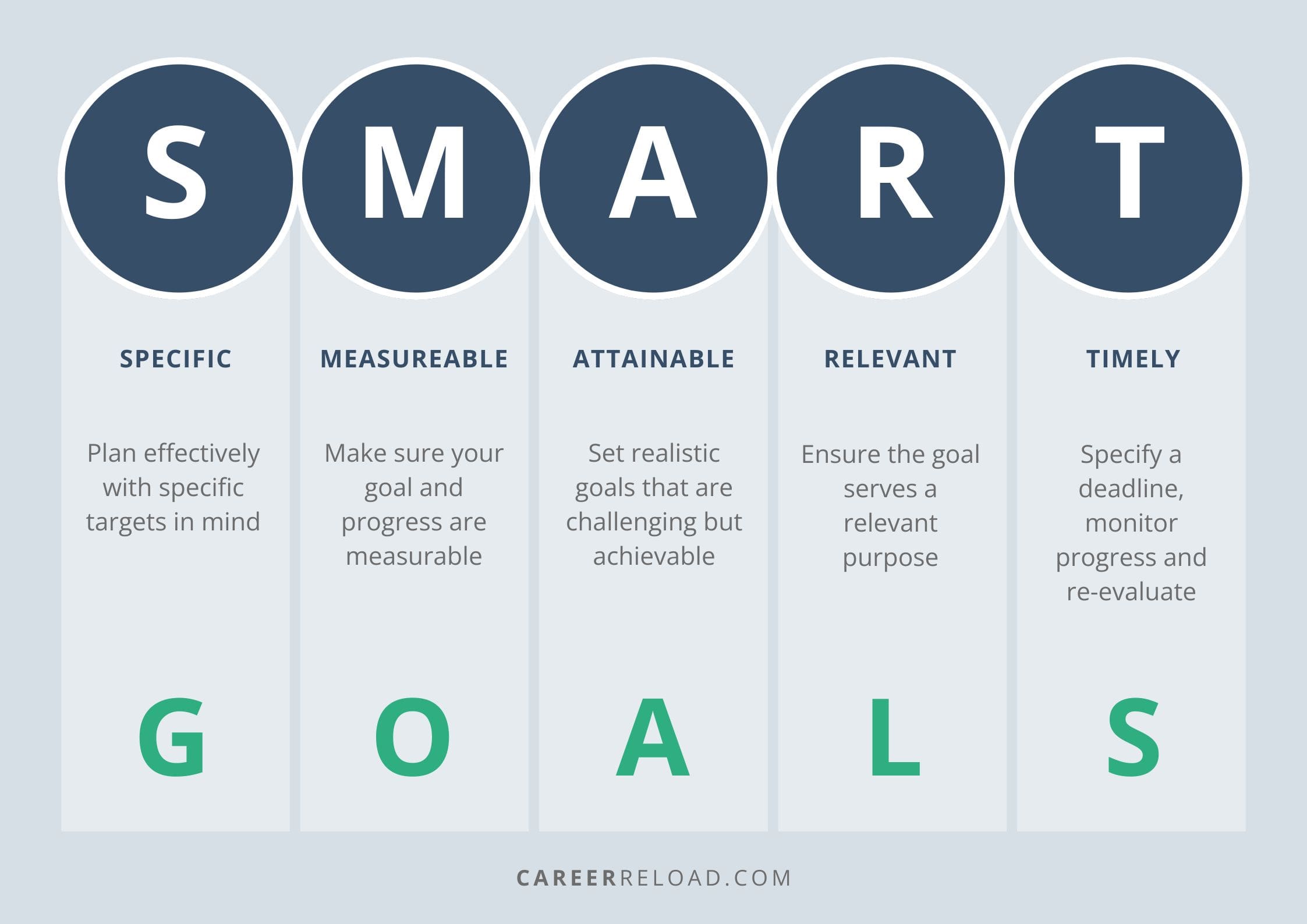
The acronym SMART provides an objective setting framework for clarity. It turns a general wish into a concrete plan. George T. Doran first published this concept in a 1981 issue of Management Review. He designed it to help managers create meaningful objectives.

The objective setting framework has evolved, but the core components remain the same. You must understand the function of each letter to use the tool effectively.
Specific
The first step is specificity. You must define clearly what you want to accomplish. A general goal like “get fit” is too broad. The brain cannot latch onto it. A specific goal identifies the “who,” “what,” and “where.” It leaves no room for ambiguity.
Measurable
You need a metric to define success. This makes the goal binary. You either did it, or you did not. If you cannot measure progress, you cannot manage it. Measurement provides the feedback loops necessary to stay motivated.
Achievable
This is the reality check. Your goal must be realistic given your current resources and constraints. It should stretch your abilities but remain within the realm of possibility. If a goal is too easy, you will get bored. If it is impossible, you will give up.
Relevant
Relevance ensures the goal matters to you or your organization. It must align with broader values or long-term objectives. If a goal is not relevant, you will not prioritize it when you get busy.
Time-bound
Every goal needs a deadline. A target without a date is just a dream. Deadlines create a sense of urgency. They force you to prioritize tasks and prevent procrastination.
Phase 1: The brain dump process
Do not try to write a perfect SMART goal in your first draft. This leads to “analysis paralysis.” You will spend too much time worrying about wording and not enough time planning.
Start with a “brain dump.” Write down your raw intention. It can be messy. It can be vague.
Example of a raw goal:
“I want to get more visitors to my company website.”
This statement is the clay. You will mold this raw idea into a structured plan in the next phase.
Phase 2: The editing process
This section covers the practical steps of how to write SMART goals. We will take the raw goal above and filter it through the five criteria.
Refining for specificity
The raw goal mentions “more visitors.” This is not specific enough. You need to define the type of visitor and the destination.
Ask yourself specific questions:
- Which pages should they visit?
- Where should these visitors come from?
- Who is responsible for this?
Draft 2: “The marketing team will increase organic search traffic to the company blog.”
This is better. We now know who is doing the work (marketing team), the channel (organic search), and the location (company blog).
Adding the metrics
Now you must add numbers. Without data, you cannot track success. “Increase” could mean one new visitor or one million. You need a target.
Draft 3: “The marketing team will increase organic search traffic to the company blog by 20 percent. This means moving from 10,000 to 12,000 monthly sessions.”
This version includes a baseline and a target. It is measurable.
Checking feasibility
Look at the number you just wrote. Is a 20 percent increase achievable?
Consider your resources:
- Do you have the budget for content creation?
- Does the team have the time?
- Is the market trend favorable?
If you rely on a small team that is already overworked, 20 percent might be too high. Maybe 10 percent is safer. However, if you just hired a new SEO agency, 20 percent might be too low. Adjust the number based on facts, not hope.
Anchoring relevance
Why does this goal matter? Traffic for the sake of traffic is vanity. You need to connect the goal to a business outcome. This keeps the team motivated when the work gets difficult.
Draft 4: “The marketing team will increase organic search traffic to the company blog by 20 percent to generate 50 new qualified leads per month.”
Now the goal is relevant. It ties the effort to revenue and growth.
Setting the clock
Finally, you must set a finish line. Without a deadline, work expands indefinitely. This is known as Parkinson’s Law. You need a date to drive action.
Final SMART Goal:
“By September 30th, the marketing team will increase organic search traffic to the company blog by 20 percent (from 10k to 12k monthly visits) to generate 50 new qualified leads per month.”
This statement is a complete contract. It tells you exactly what to do, how to measure it, and when to finish.
Why even well-written goals fail
You can follow the formula perfectly and still fail. Writing the goal is only the first step. There are psychological traps that can derail even the best plans.
The achievable trap
There is a fine line between a “stretch goal” and a “delusional goal.”
A stretch goal pushes you slightly outside your comfort zone. This promotes growth. A delusional goal ignores reality.
For example, aiming to double your income in one month is likely impossible. When you set the bar too high, you trigger a fear response. The brain views the task as a threat rather than a challenge. This leads to avoidance.
Always base your “Achievable” metric on historical data. If you grew 10 percent last year, aiming for 15 percent is a healthy stretch. Aiming for 100 percent is a setup for failure.
The relevance disconnect
You must care about the outcome. This is often the most overlooked part of the SMART framework.
If a manager assigns a goal that conflicts with your personal values, you will struggle. This is called “extrinsic motivation.” It works for short periods but burns out quickly.
To succeed, you need “intrinsic motivation.” You must see how the goal benefits you personally or aligns with your identity. When learning how to write SMART goals, always add a “so that” clause.
- “I will learn Excel so that I can stop working late and see my family.”
The benefit to your family makes the goal relevant and sticky.
Lack of an action plan
A SMART goal is a destination. It is not a map.
A common mistake is confusing the goal with the plan. The goal tells you what you want. The plan tells you how to get there.
Once you write the goal, you must break it down into daily habits. If your goal is to write a book by December, your system is writing 500 words every morning. You do not rise to the level of your goals. You fall to the level of your systems.
Tools and templates to help you write SMART goals
You do not need complicated software to start. A simple sentence formula works well.
The fill-in-the-blank formula
Copy and paste this structure to draft your objectives:
“I will [Action Verb] [Specific Focus] by [Measurement/Number] so that I can [Relevance/Benefit] by [Deadline/Date].”
Example:
“I will [secure] [three new retainer clients] by [reaching $5,000 in recurring revenue] so that I can [quit my part-time job] by [December 31st].”


Digital tools for KPI tracking
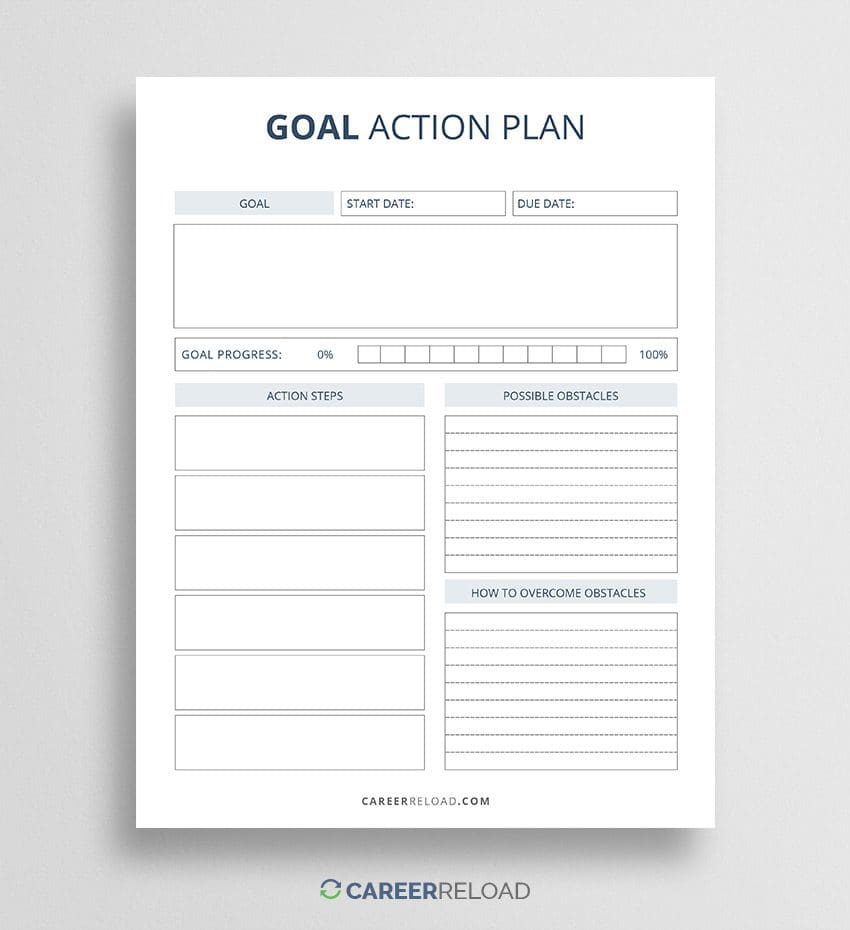
Writing the goal is step one. KPI tracking it is step two. Several tools can help you monitor the “Measurable” and “Time-bound” aspects.
- Notion, Asana or Trello: Good for breaking the main goal into smaller tasks with due dates.
- Google Sheets: Essential for tracking numerical data and creating charts.
- Journal apps: Useful for reflecting on progress and adjusting the “Achievable” metrics if necessary.
Common questions about goal setting
How long should a SMART goal be?
A SMART goal should be one or two sentences. It needs to be short enough to memorize. If you cannot recite your goal, it is too complex. You can keep the detailed execution plan in a separate document.
Can I change my goal after writing it?
Yes. A goal is a tool, not a prison. If your circumstances change, you should update the goal. For example, if you lose a team member, you must adjust the “Achievable” metrics. Review your goals quarterly to ensure they remain relevant.
How many goals should I have at once?
Focus is a limited resource. Research suggests you should have no more than three major goals at one time. If you try to change everything at once, you will likely change nothing. Pick one professional goal and one personal goal to start.
What is the difference between a goal and an objective?
In many contexts, these terms are interchangeable. However, in business planning, a “goal” is often the broad, long-term outcome. The “objective” is the specific, measurable step you take to get there. The SMART framework applies best to objectives.
Why is writing the goal down important?
Dr. Gail Matthews from Dominican University found that people who write down their goals are 42 percent more likely to achieve them. Writing engages a different part of the brain. It signals to your subconscious that this intention is serious.
Summary of best practices on how to write SMART goals
Mastering how to write SMART goals requires practice. It is a skill like any other. You should make it part of your professional development planning.
Remember these key points:
- Start with a brain dump. Get the raw idea out of your head first.
- Be specific. vague language leads to vague action.
- Use numbers. If you can’t measure it, you can’t improve it.
- Check your resources. Ensure the goal is realistic.
- Set a deadline. A date creates urgency.
- Create a system. Build daily habits that support the goal.
Goal setting is not about fixing yourself. It is about creating a structure that allows you to succeed. Take one vague wish you have today. Apply this objective setting framework. Turn it into a professional development plan. The difference between a dream and a reality is often just a deadline and a metric.

Sara has been in the career development field for over 10 years and has a wealth of knowledge to share. She covers topics such as resume writing, job search strategies, interview techniques, career planning, and more. She has curated our free downloadable resume templates for Word and resume templates for Google Docs.
Others also read
Last-Minute Interview Hacks Every Candidate Should Know in 2026
How to Evaluate a Potential Employer Before Accepting a Job
How to Network on Social Media When Job Hunting
CV vs Resume: What Are the Differences
IT Resume Example for Tech Professionals
How Personality Tests Can Help You in Your Career and Job Search
How to Create a CAR Method Resume
How to Manage Health Insurance Continuity During a Job Change
You Might Also Like These Free Templates
Resume Template in Word Document
Google Docs Resume Format – Debbie
Free Template for Resume
Free Resume Form Template
2 Column ATS Resume Template
ATS Friendly Resume Format for Word – Lindsay
Cover Letter Template with Monogram
Professional Cover Letter Template
Free Modern Resume Template for Word
Free Job Application Tracker for Excel
Free Resume Template Download for Word – Farrah
Free ATS-Friendly Resume Template – Emily