

You have likely heard the rumors: “Nobody reads cover letters anymore.” “They are a relic of the past.” “Just send your resume and hope for the best.”
It is a comforting thought. Writing cover letters is time-consuming and often frustrating. However, relying on internet hearsay can be dangerous for your job search.
At Career Reload, we wanted to move past the anecdotes and get the raw numbers. We surveyed 553 hiring decision-makers, including external recruiters, HR specialists, and hiring managers to find out if the cover letter is dead.
The short answer? Absolutely not. In fact, failing to send one is the quickest way to get rejected.
The Verdict: Do You Need a Cover Letter?
Yes. According to our survey of 553 hiring professionals, 89% expect cover letters to accompany a resume. Furthermore, 83% of respondents stated that the cover letter is a crucial factor in their decision-making process.
If you are skipping this step, you are ignoring the expectations of nearly 9 out of 10 recruiters.
Key Findings at a Glance
- 89% of hiring pros expect a cover letter.
- 83% actively read them.
- 81% have rejected a candidate solely because of their cover letter.
- 83% say a great letter can secure an interview even with a weak resume.
The “Optional” Trap: What Recruiters Really Mean
One of the biggest dilemmas candidates face is the “Cover Letter Optional” checkbox. Is it a trick? Is it a test?
Our data suggests that “optional” usually means “mandatory if you want the job.”
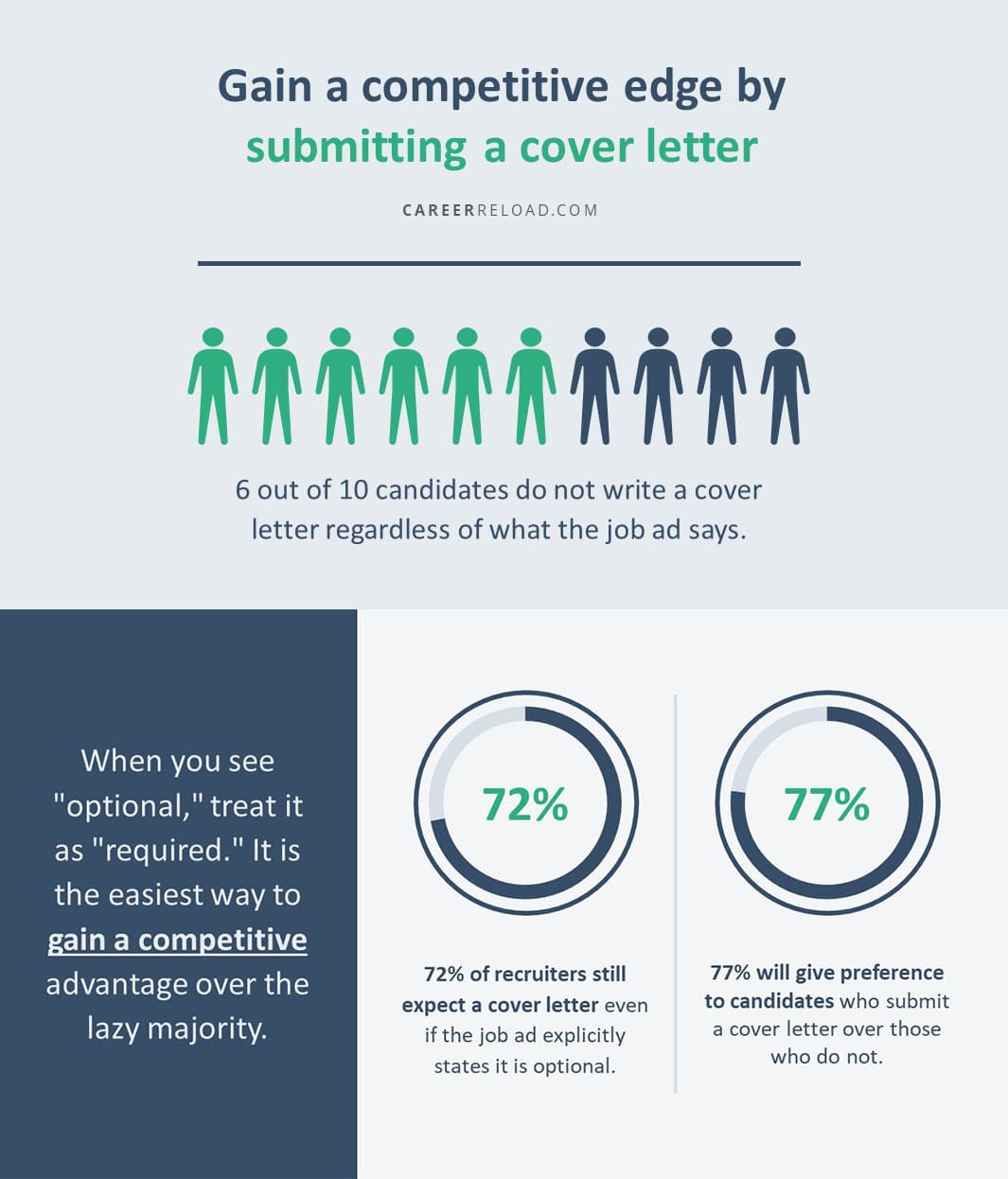
- 72% of recruiters still expect a cover letter even if the job ad explicitly states it is optional.
- 77% will give preference to candidates who submit a cover letter over those who do not.
The Takeaway: When you see “optional,” treat it as “required.” It is the easiest way to gain a competitive advantage over the lazy majority.
The Competitive Advantage
Here is where the opportunity lies. Despite the overwhelming demand for cover letters from employers, candidates are not delivering.
Our data shows that 6 out of 10 candidates do not write a cover letter regardless of what the job ad says.
By simply writing one, you mathematically place yourself in the top 40% of applicants before your resume is even reviewed. You are showing dedication that the majority of your competition lacks.
Can a Cover Letter Save a Bad Resume?
Perhaps the most surprising insight from our study is the “redemption factor.”
We asked recruiters if a strong cover letter could make up for a resume that lacks experience or has flaws. 83% agreed that a great cover letter can land you an interview even if your resume is not good enough.
Conversely, a bad cover letter can sink a great candidate. A staggering 81% of hiring managers admitted to rejecting candidates solely based on their cover letter.
The lesson? Your cover letter is not just a summary of your resume; it is your safety net. It bridges the gap between your current skills and the employer’s needs.
Do Recruiters Actually Read Them?
A common myth is that recruiters only scan resumes and toss the letters. Our data proves this wrong.
- 83% of hiring decision-makers say they read cover letters.
- 45% read the cover letter before they even look at the resume.
If you are part of the group that believes “recruiters don’t have time to read,” you are gambling with the fact that nearly half of all hiring managers will look for your letter first. If it’s not there, you’ve made a poor first impression.
What Should You Put in a Cover Letter?
Now that we know they are necessary, what do hiring managers actually want to see? It’s not about repeating your resume bullet points.
Recruiters told us they look for specific context that a resume cannot provide:
- Motivation for Career Changes (50%): If you are pivoting industries, your resume shows what you did, but the cover letter explains why you are moving.
- Explaining Employment Gaps (49%): Don’t let a gap in your dates leave a recruiter guessing. Use the letter to control the narrative.
- Highlighting Achievements (47%): Use the letter to expand on a specific win that proves you can solve the company’s problems.
Best Format: Attachment or Email Body?
In the age of “Easy Apply” and email applications, format matters. When submitting via email, what is the preference?
- 48% of recruiters prefer the cover letter written directly in the email body.
- The remaining split prefers an attachment (PDF/Word).
Our Advice: If the job posting doesn’t specify, paste your cover letter into the body of the email and attach it as a PDF. This covers all bases, the recruiter can read it immediately on their phone (email body) or print it out for a meeting (PDF).
Here are some attention-grabbing cover letter layouts to get started:

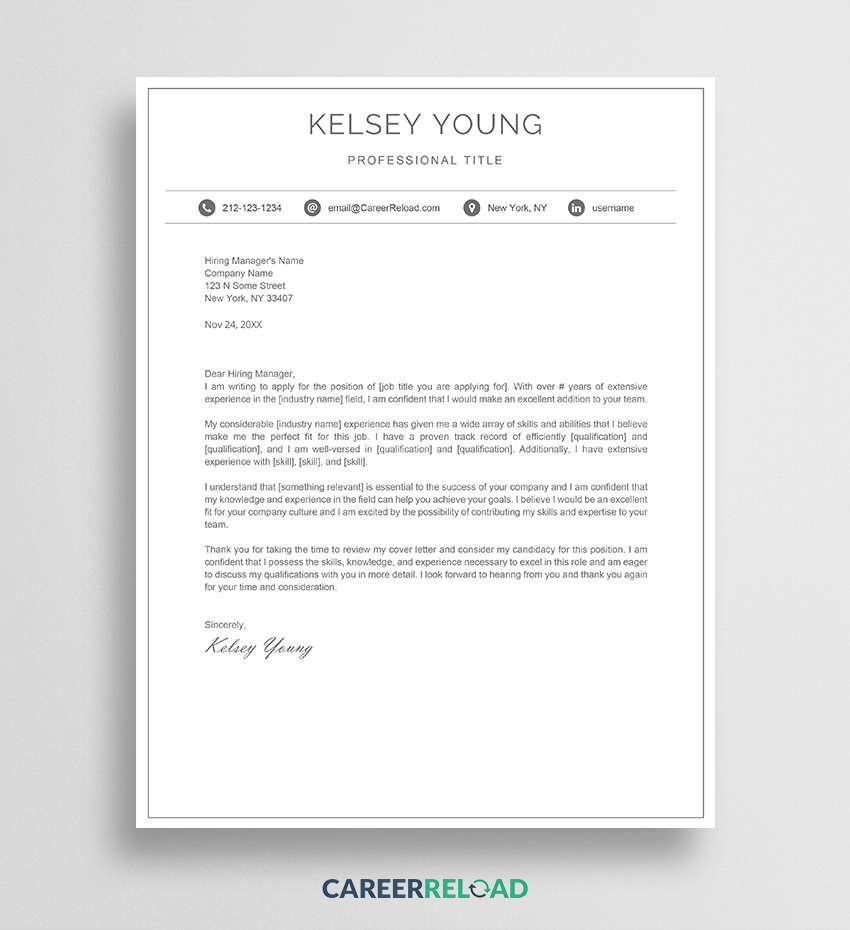

Browse more Word cover letter templates or Google Docs cover letters.
Methodology
The findings presented in this article are based on a survey conducted by CareerReload.com. We surveyed 553 hiring decision-makers, consisting of external recruiters, in-house HR specialists, and hiring managers. The respondents were screened to ensure they currently hold decision-making power in the recruitment process.

Sara has been in the career development field for over 10 years and has a wealth of knowledge to share. She covers topics such as resume writing, job search strategies, interview techniques, career planning, and more. She has curated our free downloadable resume templates for Word and resume templates for Google Docs.
Others also read
10 Career Coaches and Their Best Career Advice
What Are The Best Job Search Websites
13 Common Resume Questions Answered
How to Research a Company for a Job Interview
IT Resume Example for Tech Professionals
How to Write a Resume With No Experience
College Resume Example That Helps You Standout
Why College Career Fairs Are Still Valuable To Students
You Might Also Like These Free Templates
Google Docs Resume Format – Debbie
Free Resume Form Template
Free Resume Design – Megan
2 Column ATS Resume Template
ATS Friendly Resume Format for Word – Lindsay
Goal Planner Template
Cover Letter Template with Monogram
Professional Cover Letter Template
Free Modern Resume Template for Word
Free Job Application Tracker for Excel
Free Resume Template Download for Word – Farrah
Free ATS-Friendly Resume Template – Emily